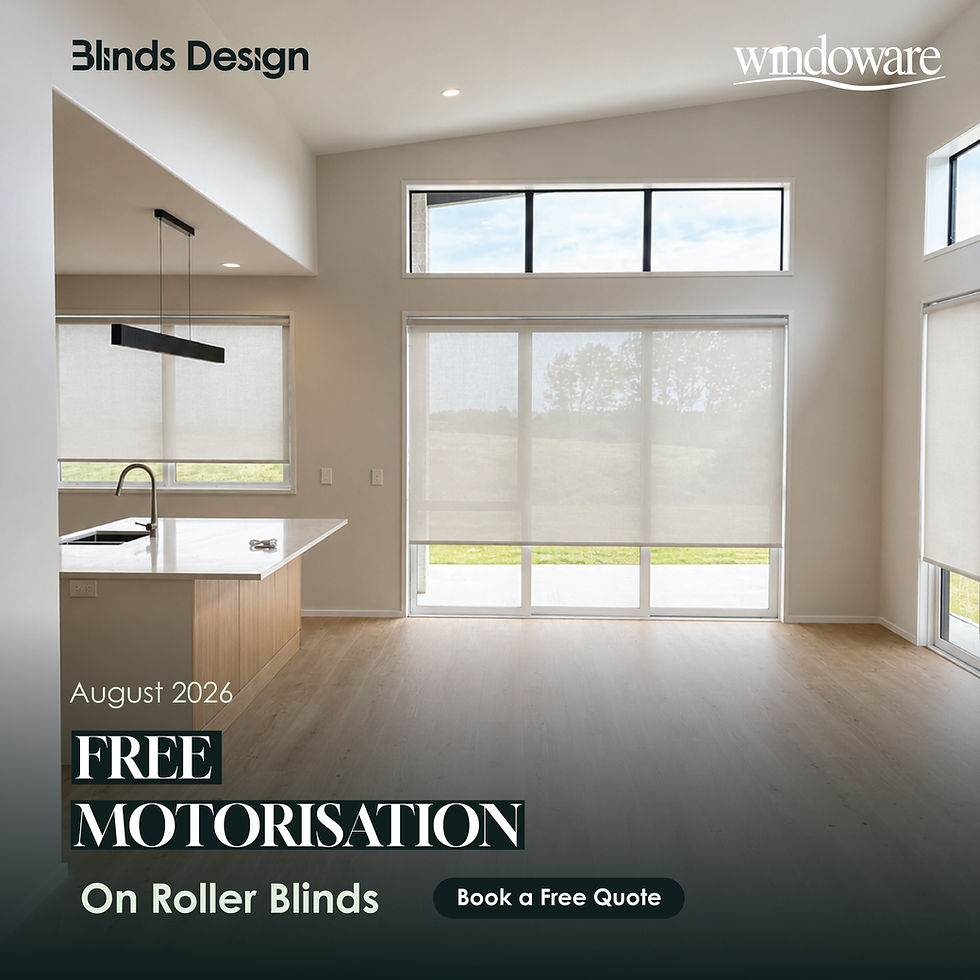
Motorised Blinds 101: Are Smart Window Treatments Worth It?
Motorised blinds have moved from a luxury reserved for high-end homes to an increasingly popular, accessible upgrade for everyday households. But are they actually worth the investment? Here's what you need to know before deciding.
How Motorised Blinds Work
Motorised blinds use a small, battery-powered or hardwired motor built into the headrail to raise, lower, or tilt the blind automatically. They can typically be controlled through:
A remote control
A smartphone app
Voice commands via smart home assistants like Google Home or Amazon Alexa
Automated schedules based on time of day or sunlight levels
Many systems also integrate with broader smart home setups, allowing your blinds to work alongside lighting, heating, and security systems.
The Benefits
Convenience Being able to open or close blinds without getting up - especially for hard-to-reach windows, skylights, or large multi-panel setups - is one of the most immediately appealing benefits. This is particularly valuable for elevated windows or spaces where manual cords aren't practical.
Energy efficiency Scheduled or sensor-based operation means your blinds can automatically close during the hottest part of the day to keep a room cooler, or open to let in warming sunlight during winter mornings. Over time, this automated approach to light and heat management can contribute to lower energy bills.
Improved safety Removing cords and manual chains reduces a safety hazard, particularly important in homes with young children or pets. Many motorised blinds are cordless by design, which addresses this concern directly.
Enhanced privacy and security Scheduling blinds to open and close automatically, even while you're away, can make a home look consistently occupied — a small but useful deterrent for anyone monitoring the property.
Accessibility For elderly residents or those with mobility or dexterity challenges, motorised blinds remove the physical effort of manual operation, making them a genuinely practical accessibility upgrade rather than just a convenience feature.
The Trade-offs
Upfront cost Motorised blinds cost more than manual equivalents.
Maintenance and power Battery-powered systems need occasional recharging or battery replacement, while hardwired systems require electrical work during installation. It's worth weighing which option suits your home and how much ongoing upkeep you're comfortable with.
Learning curve While most systems are designed to be user-friendly, integrating them with existing smart home ecosystems can involve a bit of initial setup and troubleshooting.
Who Gets the Most Value From Motorised Blinds?
Homes with hard-to-reach or oversized windows
Households with young children or pets, where cordless operation is a safety priority
Anyone already invested in a smart home ecosystem
People who travel frequently and want the security benefit of automated scheduling
Those with mobility considerations who benefit from hands-free operation
Making the Decision
If your main motivation is aesthetics and basic light control, standard manual blinds may serve you just as well at a lower cost. But if convenience, energy efficiency, safety, or accessibility are priorities in your home, motorised blinds offer genuine, everyday value — not just a novelty upgrade.
If you're weighing up whether motorised blinds are right for your home, we're happy to talk through the options, from battery-powered single rooms to fully integrated whole-home systems.
Book a free measure and quote with us today!